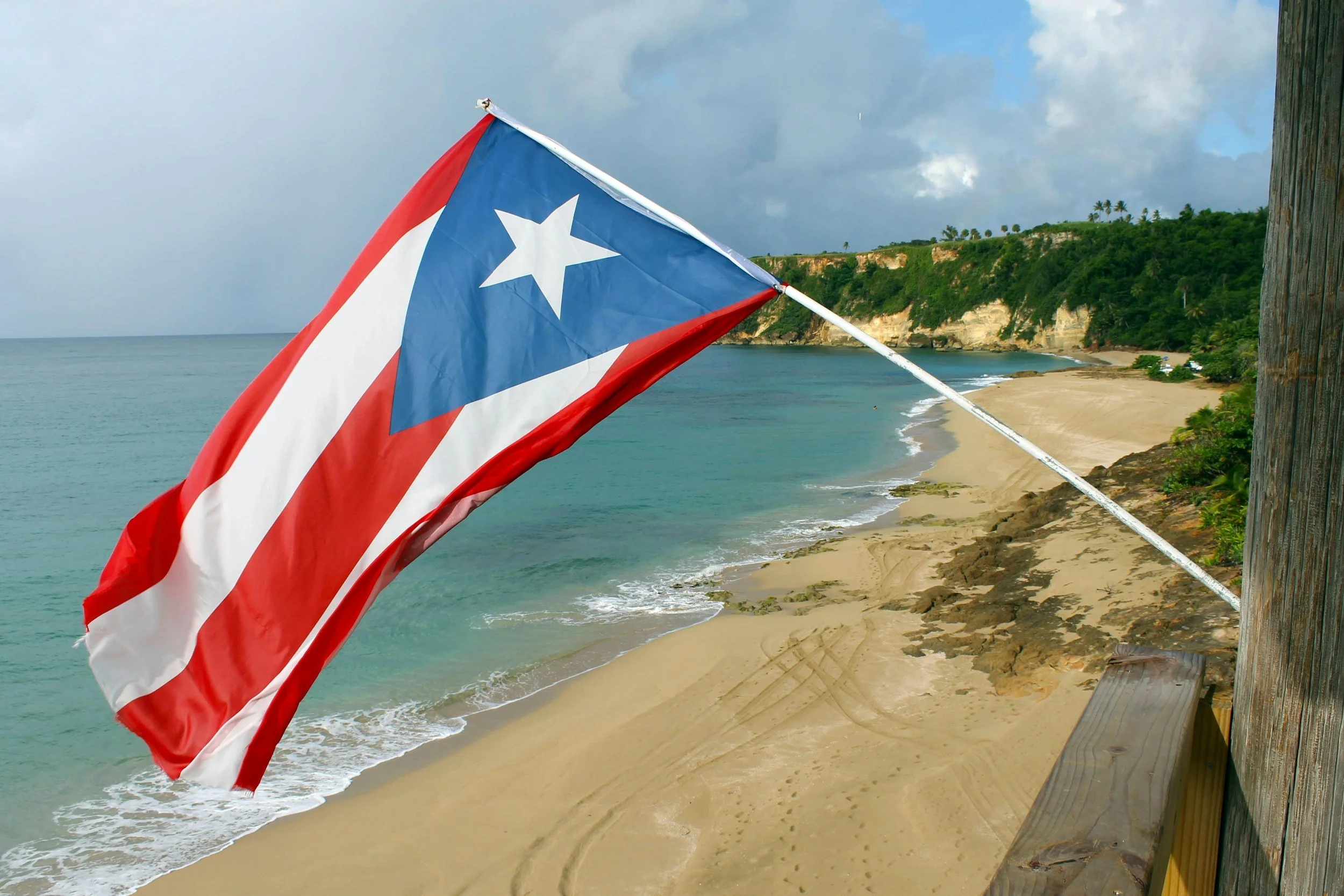
Puerto Rico - the domestic international education option
/Why Puerto Rico Works Well for Short-Term Study Abroad Programs
Are you looking for an international education destination that is easy to manage, culturally rich, and a good fit for short-term faculty-led programs? Look no further! Puerto Rico offers all of that, and because it is a U.S. territory, it removes many of the common barriers that keep students from participating. For faculty-led and short programs, it’s a destination that delivers meaningful learning without unnecessary complications.
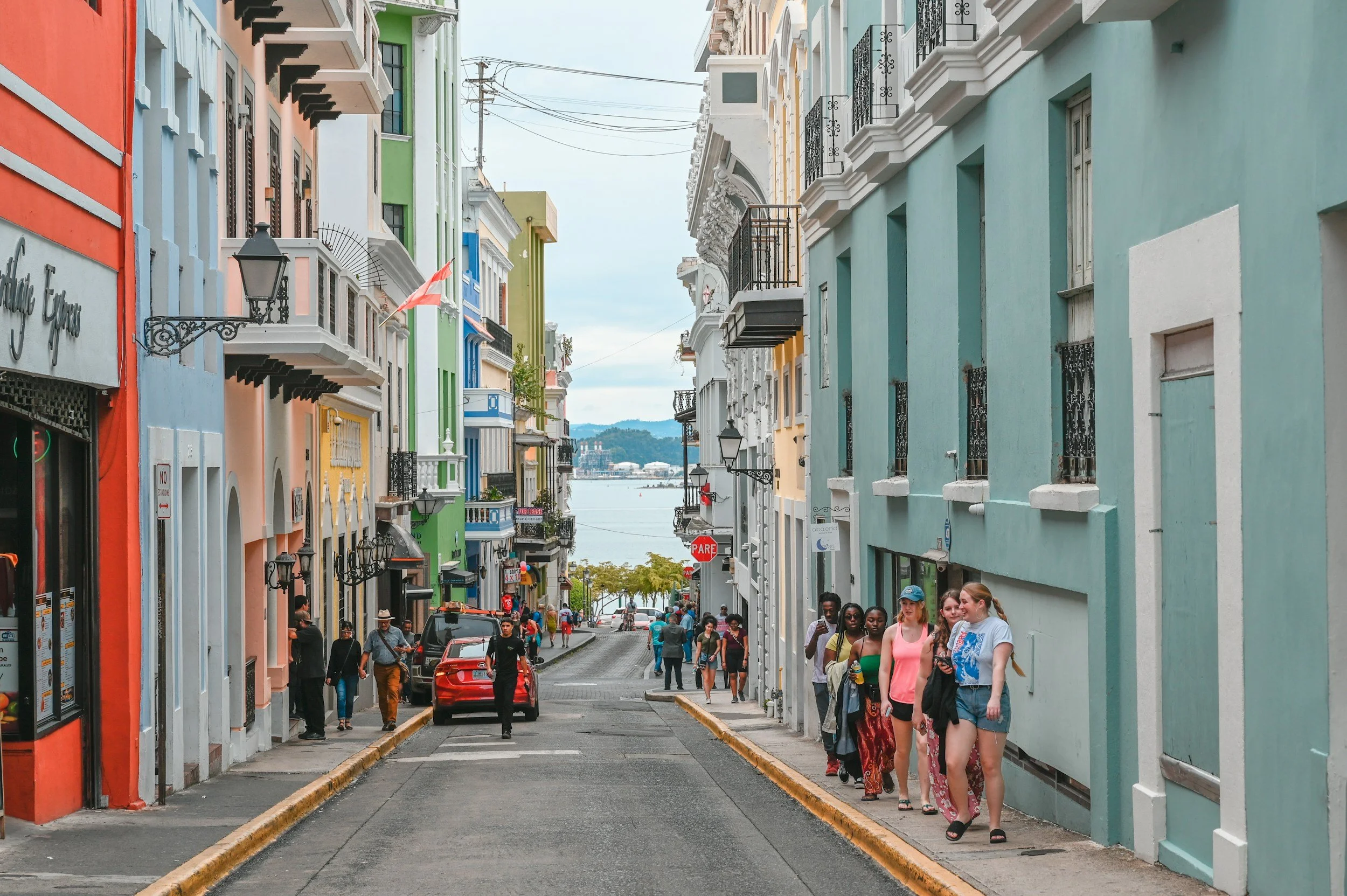
The streets of old san juan offer plenty of opportunity to explore and learn
1. No Passport Needed
For U.S. institutions, one of the biggest advantages is that students and faculty don’t need a passport to travel to Puerto Rico. It’s considered domestic travel, which removes cost, paperwork, and long processing times of obtaining a passport. This can make a major difference for students who might not have a passport and one who are coming from lower-income backgrounds for whom the cost of obtaining a passport may be prohibitive.
Also, there is no need to go through customs and immigration on the way back to mainland US.
2. A Distinct Cultural Experience Close to Home
Although Puerto Rico is part of the U.S., the cultural experience is very different. The island blends Taíno, Spanish, African, Caribbean, and U.S. influences. Short-term programs can easily build strong educational content around:
Colonial history and Puerto Rico’s political status - The capital, San Juan, has an exceptional colonial center with a several fortifications dating back hundreds of years. Puerto Rican population is divided between those who want to maintain the status quo as a US territory and those who want statehood in the United States. A growing faction, especially among young people, are vying for independence.
Caribbean history and identity - Puerto Rican culture, cruise, and Spanish dialect is close to Cuban, but the island is much more accessible of course. The blend of Native, African, and European culture is unique on every island, but the blend of these cultures is a shared identity across the region.
Afro-Caribbean culture - Music such as Bomba and Plena, which draw on African drumming and dance, the vejigantes, which blend Spanish and African mask-making traditions, and of course the cuisine, like the mofongo, a delicious pile of cooked green plantains mixed in an infinite number of variations with other ingredients, are all examples of African influence.
Architecture, music, and the arts - From colonial to art deco and modern and post-modern San Juan is an architectural diamond in the rough. Bad Bunny is one of the world’s biggest pop stars. Some of the best art museums in the Caribbean are in Puerto Rico.

vejigante mask in Museo de Arte de Puerto Rico
3. Strong Academic Opportunities Across Many Fields
Puerto Rico works well for programs in a wide range of disciplines. Partnerships with the University of Puerto Rico, which has campuses throughout the island, can leverage existing research and facilitate peer to peer exchange. Some areas that are especially strong include:
STEM: The world famous Arecibo Observatory, where the movie Contact with Jodi Foster was filmed, was recently transformed into a community-based STEM learning center. A large portion of the island is covered by unique karst limestone with many caves to explore. Puerto Rico is an exceptional place for scientific exploration. Here is our sample program on Astronomy in Puerto Rico.
Environmental science: One can study rainforest ecosystems in the only tropical rainforest in the US Forest system at El Yunque; coastal management projects include mangrove restoration; sustainability initiatives include renewable energy and community resilience in central highlands as well as coral reef restoration initiatives along the coasts; and of course there is plenty of climate change research. Check out our sample program in Tropical Biology in Puerto Rico.
Public health: Community health initiatives include ongoing hurricane recovery and resiliency efforts as well as improvements in emergency response systems. There are also opportunities to visit community clinics, NGOs, and university-led research centers that focus on topics like environmental health, vector-borne diseases, water quality, and the social determinants of health.
Business and economics: Entrepreneurship, tax incentive zones, economic development, and small-business innovation. The island operates at the intersection of U.S. and Caribbean markets. Tariffs are determined by US federal policy that Puerto Rico cannot influence. Local tax incentives are aimed at attracting investors, startups, and remote workers.
Arts and humanities: An outdoor street art gallery in the Santurce neighborhood is an example to political protest through the arts. Museo de Arte de Puerto Rico, the Museo de Arte Contemporáneo, and smaller community-based arts spaces provide access to classical and contemporary works from Puerto Rican artists. Faculty can easily incorporate workshops, performances, or conversations with local musicians and cultural educators to help students understand how these traditions have evolved and how they shape everyday life.
Social sciences: Themes such as migration, identity, governance, and resilience can be explored through the lens of colonialism and post-colonialism. Students can explore how Puerto Ricans navigate life between the island and the mainland, including bilingualism, cultural preservation, and diaspora communities. Puerto Rico’s political status as a territory, some might say a modern colony, is a fascinating case study in governance and political science.

the arecibo observatory in 2012. After IRREPARABLE damage in 2020 the facility was converted into a stem education center soon to be open to the public.
4. A Useful Case Study in Sustainability, Resilience and Community Strength
In addition to the academic subjects that can be explored through a visit to Puerto Rico, one of the most striking elements of a program there is the resilience of the people of Puerto Rico, who have faced major environmental and economic challenges in recent years. The island offers powerful real-world examples of:
Students can explore how neighborhoods organize around mutual aid, a model that became especially visible after Hurricane María. Many communities built their own response networks—sharing resources, setting up community kitchens, and supporting elderly or vulnerable neighbors. These examples help students understand bottom-up problem solving and the strengths of community-led action.
Puerto Rico is moving toward more decentralized energy systems, including solar microgrids, rooftop solar projects, and battery storage initiatives—often led by nonprofits, cooperatives, and local governments. Visiting these projects allows students to see practical steps toward energy independence and climate adaptation.
There has been a renewed push for local agriculture, community gardens, and farm-to-community programs. Students can meet with farmers, agricultural educators, and food justice organizations to understand how food sovereignty connects to long-term stability.
Faculty can also focus on how arts, culture, and storytelling play a role in recovery. Many artists and cultural groups use creative work to support healing, preserve memory, and strengthen community identity. Likewise, economics, business, or tourism and hospitality faculty can explore the role of tourism development and redevelopment in fortifying the Island economically.
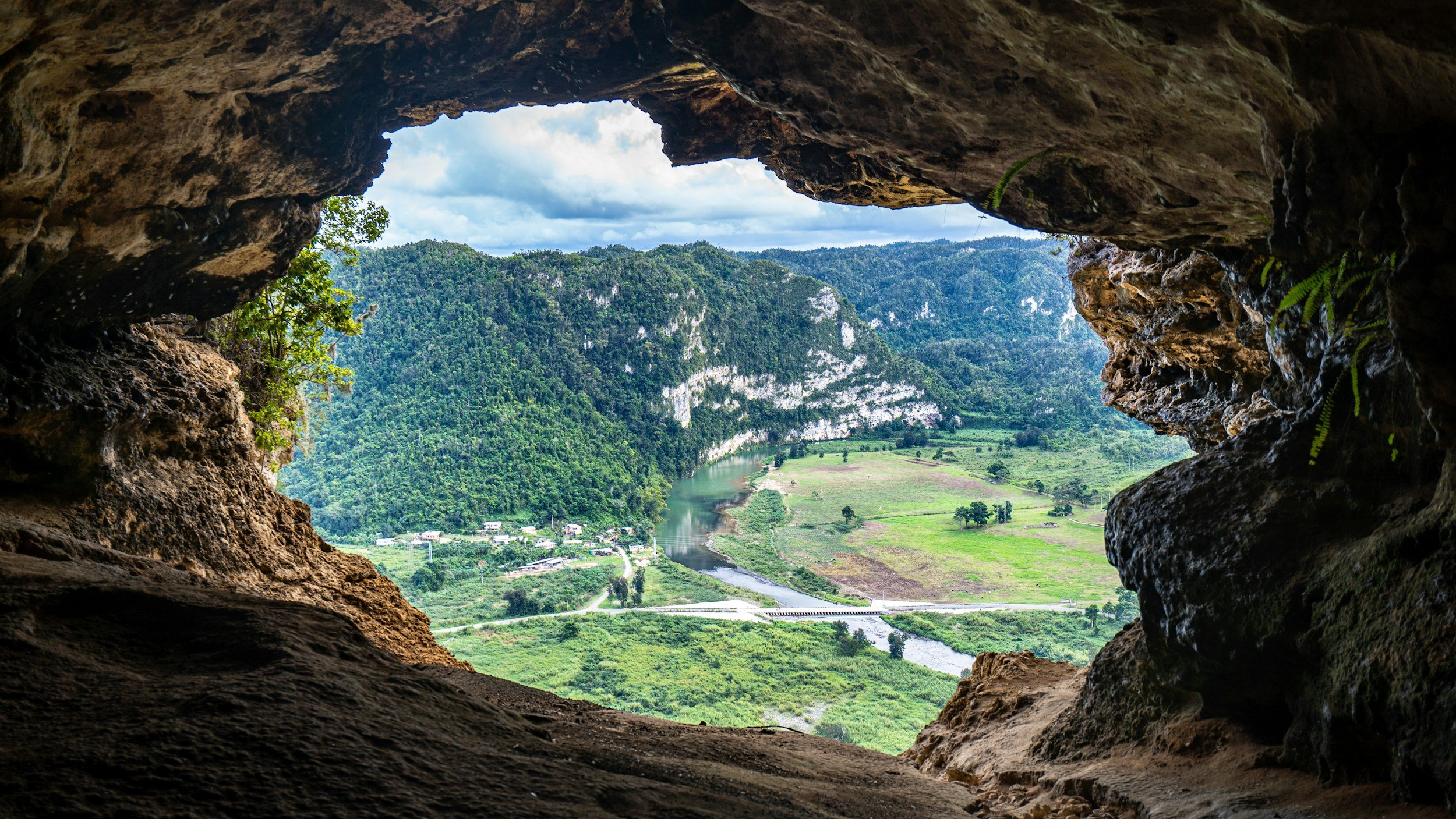
window cave is just one of many geological points of interests in Puerto rico.
5. Simple Logistics and Lower Costs
Planning a program in Puerto Rico is generally easier than running one abroad. Key benefits include:
Domestic flights are cheaper and easier to schedule.
No currency exchange—everything is in U.S. dollar.
Most major U.S. phone carriers work normally, without roaming fees.
Fewer compliance challenges because travel to a U.S. territory typically requires less institutional oversight.
English is widely spoken, which helps with coordination, while Spanish immersion is still available for students.
These factors can help keep overall program costs down and simplify planning for study abroad offices.
6. Reliable Local Partners and a Comfortable Student Environment
Puerto Rico has strong universities, nonprofits, research centers, and cultural institutions that are open to collaboration. The island generally offers a safe, comfortable experience for students, making it a good fit for high impact short-term faculty-led programs.
As institutions work to expand access and offer more inclusive global learning opportunities, Puerto Rico stands out as a destination that is both approachable and impactful.