
Artificial Intelligence and Education Abroad
/
It’s stunning how quickly AI is changing everyday life
It seems as if artificial intelligence comes up in nearly every conversation I have with my faculty and staff colleagues of late. Advisors wonder whether chatbots will eventually replace them. Instructors rightly complain that narrative assignments and application essays increasingly read mechanically and soullessly. Even worse, too many faculty members even have started utilizing AI to grade those assignments, outsourcing a key part of their roles that requires applied human judgment.
In a recent survey of more than a thousand U.S. faculty members, conducted by the American Association of Colleges and Universities and Elon University's Imagining the Digital Future Center, 95 percent worry that students will become overly dependent on AI models, and more than 75 percent responded that cheating has increased since AI dawned, with 57 percent saying it has grown significantly.
I’m not yet worried that the sky will fall around us, though. We've been here before with new technologies and already know how to adapt to use AI appropriately.
The last research paradigm shifter
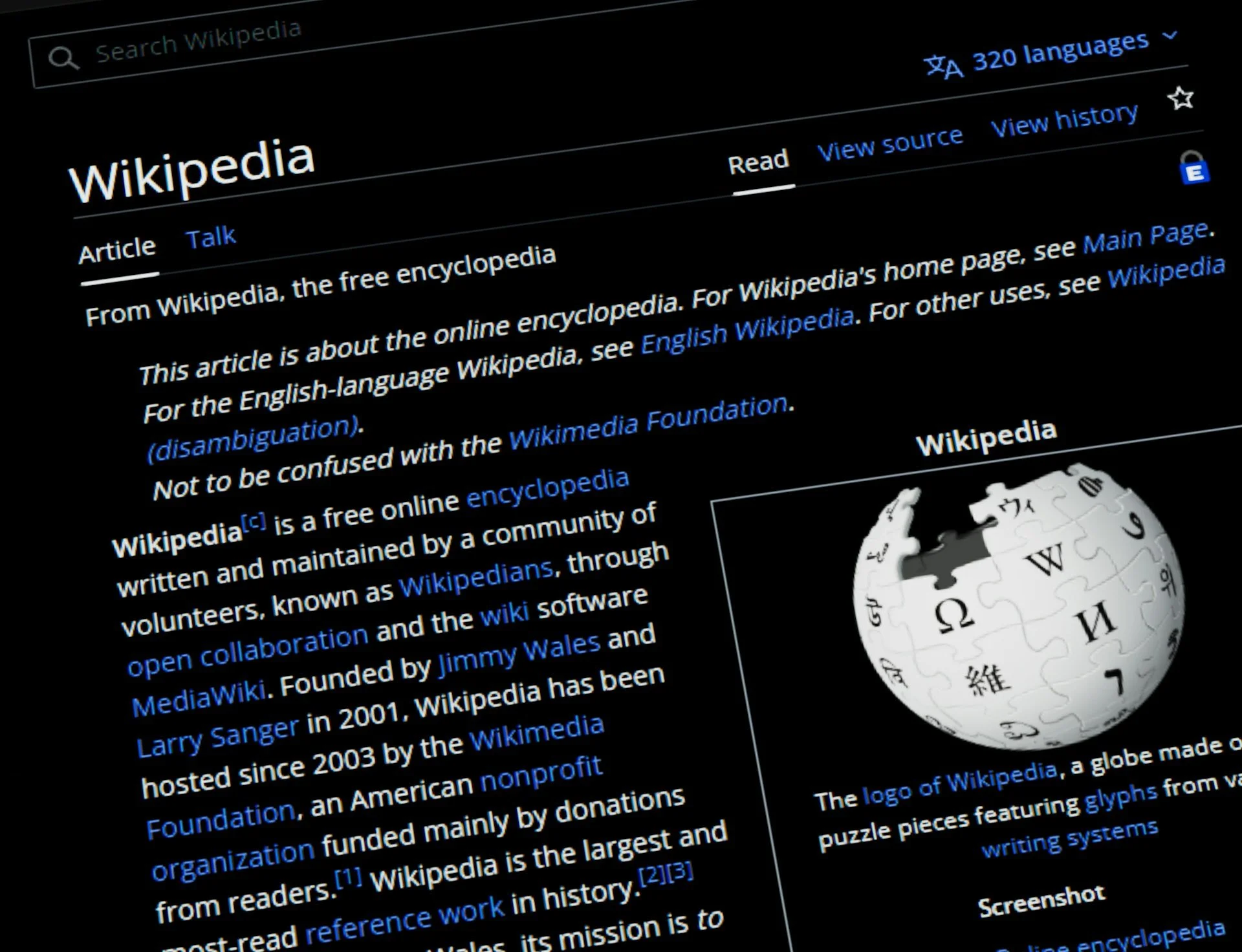
What Wikipedia Taught Us
Twenty years ago, Wikipedia triggered a nearly identical panic. Many professors banned it outright, certain that free, crowd-sourced summaries would replace the hard work of reading primary sources. As historians, my graduate student colleagues and I fiercely debated how to control students’ use of Wikipedia in their written work. That said, as a fan of wikis as media and Wikipedia as a project, I argued early on that students use Wikipedia a useful first stop on their research journeys, not the last one. Good researchers use it to get oriented, learn new vocabularies, and identify helpful footnotes that lead to real scholarship.
Discussions about generative AI deserves the same reframing. AI is not the enemy of critical thinking but should be a welcome complement. Used as a starting point for brainstorming, AI models can deepen engagement with any project, including researching education abroad programs and making meaning from the experience. Just like Wikipedia, if users employ AI as an end point in place of their own writing or judgment, it absolutely does real damage to the learning process and communication generally.
As for education abroad itself, AI can help students, faculty, staff, and parents better design and benefit from short-term programs, which for a while now have comprised the majority of U.S. study abroad programs. IIE's Open Doors data shows that 64.6 percent of all students who studied abroad in 2016-17 did so on summer programs or those eight weeks or fewer in length, and NAFSA reports that short-term programs have continued growing in popularity since the COVID-19 Pandemic. Given how much of our contemporary lives, let alone our work in international education, now operates on compressed timelines, we should consider earnestly when and how to best utilize AI to further our goal of a more meaningfully connected world.
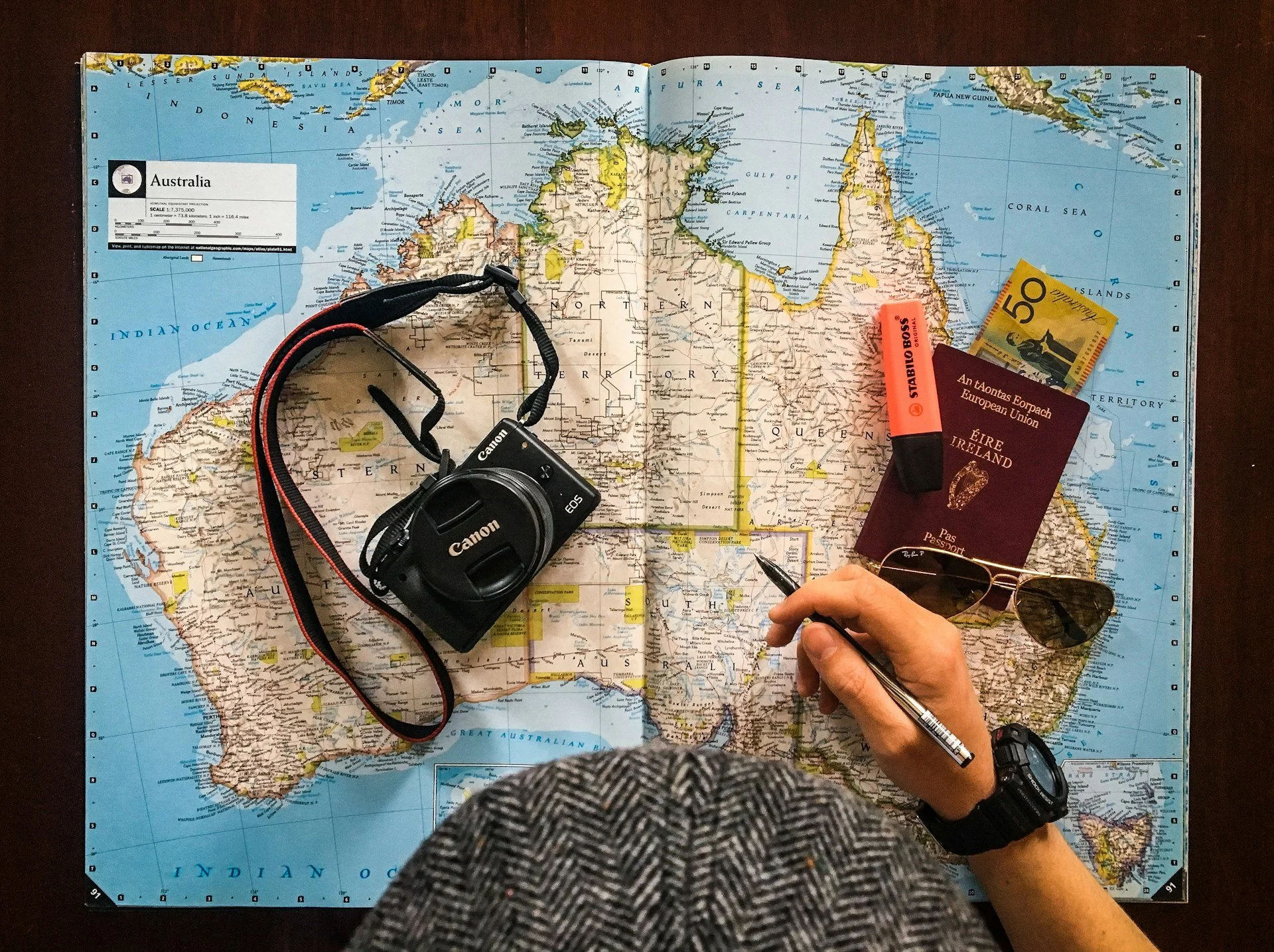
Regardless of how digital we become, faculty understandably may want to start off with a good analog map
For Faculty: A Curriculum-Design Partner, Not a Grading Substitute
Drafting a syllabus or short-term program itinerary from scratch is genuinely time-consuming work, usually done on top of a full teaching load, alongside departmental service, and without extra compensation. It’s no small feat to outline sound learning objectives, select the right location, draw up a scope for the study tour component, identify pre-departure readings, consider reflective or experiential assignments—let alone market, teach, and lead a course abroad. AI is perfectly suited to the front end of this process. Models can generate an initial list of destinations that complement a curriculum, draft discussion questions tied to specific sites, or surface lesser-known local collaborators and partners at the location. None of this work requires trusting AI's ultimate judgment. It simply requires the critical assessment needed when reading the first draft of any student’s work. The Chronicle of Higher Education profiled faculty who use AI this way, describing it as something that works well when it functions as one of many tools for instructors, rather than a replacement for their judgment.
Where I’d draw a hard line is grading. Evaluating a student's growth, voice, and thinking is precisely the kind of judgment call that can't be outsourced to a tool that lacks a personal relationship with a student and no stake in their development. Even among faculty who use AI extensively, grading remains the most controversial application. According to a Tyton Partners survey cited in the Chronicle, about one in ten have used AI for grading, which to me is still shockingly too many. Faculty should critically employ AI to help a study abroad program but should allow it to decide what a student learned by participating in it.
For Students: A Launchpad, Not a Ghostwriter
An AI-generated application essay is the modern equivalent of turning in a Wikipedia article as an essay. It may appear at first glance to be original and complete, but the student failed to think and formulate ideas critically.
Interestingly, faculty and advisors often overestimate how students are actually using (abusing) AI in this manner. The Chronicle's own reporting found that while faculty focused almost entirely on integrity violations, students described using AI to summarize readings, brainstorm paper topics, and stress-test their own arguments by asking AI to find weaknesses in their thinking. In short, they are already adapting it as we adapted Wikipedia as past students. When used appropriately, for example, AI can help a student frame a short-term program’s basic cultural context, language learning resources, a working list of scholarship opportunities, or draft a list of questions to ask their homestay family. In every one of these cases, AI is pointing students toward better sources and sharper questions, like Wikipedia or past research tools.
Of course, as I’ve sadly experienced more than I care to admit, the personal statement or reflective essay is often where I catch students abusing AI models. Needless to say, when students turn to AI to write such an intentionally subjective narrative, they fail to struggle with finding their own voice amid the program’s curriculum and structure.

Education remains a human endeavor, after all
For Staff: More Time for Relationships that Matter
The fear I hear from many of our education abroad staff colleagues, though, is less about essays and grading than the preservation of their own roles as advisors. Some organizations are already launching AI chatbots can field student questions from appropriate programs to course selection.
This fear, though, is grounded in an impoverished view of advising. Advisors shouldn’t spend their time answering quotidian concerns like “What documents do I need for my visa?” for the sixteenth time that week. None of us sought professions in higher education for that task. We do so because we enjoy being part of students’ success and development. Advisors seek to mentor them through challenging decisions that shape how they see the world. NAFSA's own reporting on AI adoption agrees. AI tools neither do nor should replace the advisor but can meaningfully reduce time spent on repetitive tasks and add consistency to routine communication. Advisors then can be freed to spend more of their limited hours on the most exciting, dare I say most human, parts of their jobs. NAFSA has gone so far as to run an entire “AI-Enhanced Study Abroad Office” series exploring exactly this, including sessions specifically on using AI to strengthen global student connection through more personalized advising and engagement strategies.

If you're a parent reading this post, your worry may be whether your student is using AI to skip the preparation or reflection that makes study abroad transformative. It depends entirely on how it's used, just as it depended on whether a student actually read sources beyond a subject’s Wikipedia entry. Ask your student what sources they consulted beyond AI, the same way you might have once asked whether they'd read the primary source behind an encyclopedia entry.
Higher education professionals have survived new technological shocks before. Calculators, the Internet, and Wikipedia faced their share of detractors. The Chronicle cited a 1986 newspaper article in which a teacher described the calculator's “tremendous potential for destruction” of student math skills. Is that not similar criticism to what we hear today about AI models? Why hasn’t our focus always been on how to teach students the most effective ways to think critically and act ethically with any tool?
The institutions that will navigate this technological paradigm shift well won't be the ones that ban AI outright, nor will they allow it passively to replace human judgment in advising, teaching, or grading. They'll be the ones that draw a clear, shared line about where AI belongs in short-term education abroad: ideation, orientation, and efficiency. We didn't lose our research skills to Wikipedia. We just learned to stop mistaking an origin for a destination.
