Global Themes for Intentional Recruitment and Fundraising
/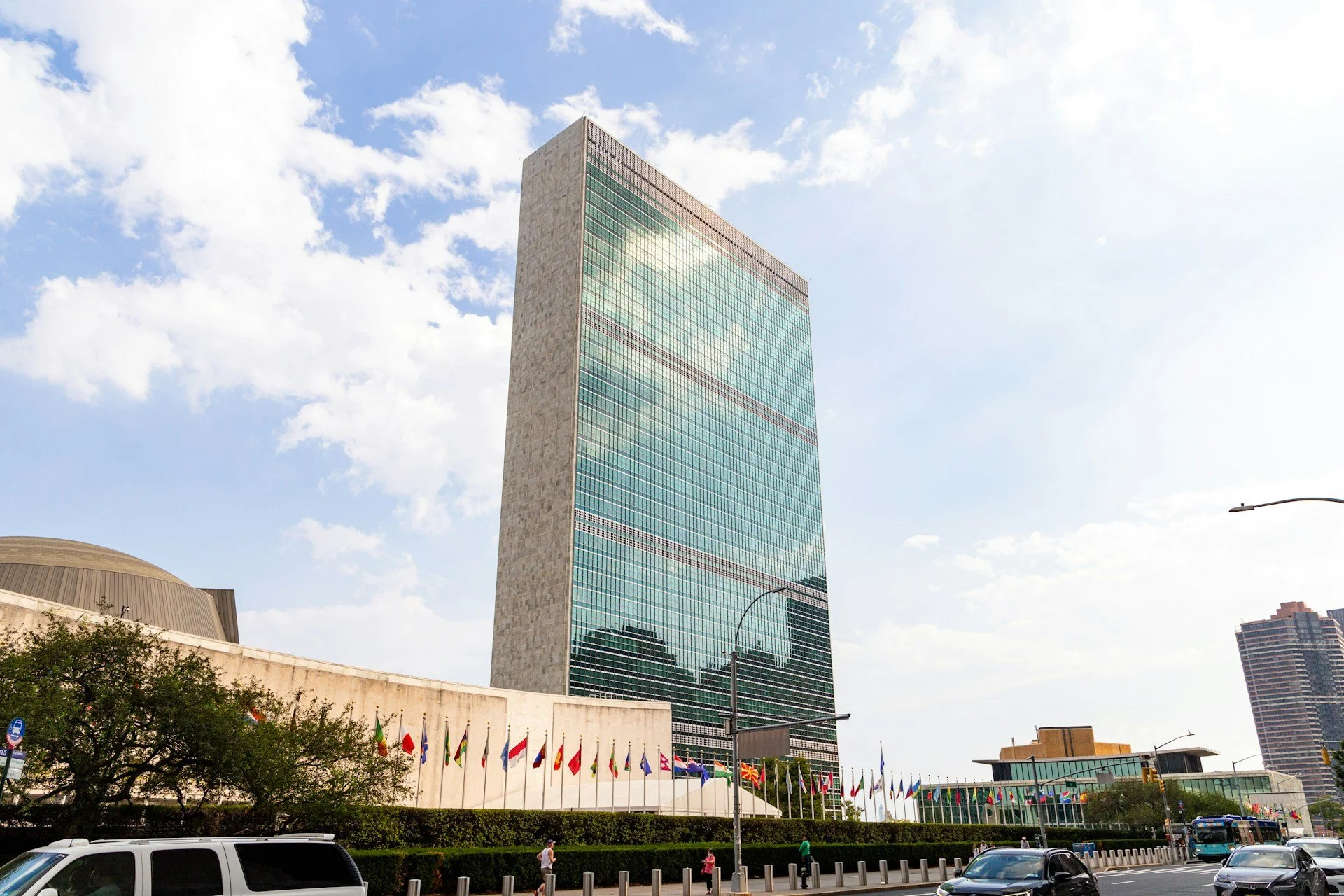
The United Nations Headquarters in New York
Faculty leaders need to appeal to at least two key audiences when designing and promoting a faculty-led program. The first is the students themselves (and their families), who are choosing among an increasingly large portfolio of high-impact learning opportunities (not just other education abroad options, but internships, research, and service-learning programs. The second is the university itself: the dean who signs off on course credit, the education abroad office that facilitates logistics and compliance, and advancement staff and donors who determine scholarship funding opportunities. Programs with generic itineraries that explore “cultures” vaguely often struggle, and deservedly so, to make their case to either audience. Programs designed intentionally around recognizable academic themes tend to do much better.
Research published in the Journal of International Students on a short-term China program found that a theme-based interdisciplinary curriculum, one built around a handful of "great questions,” helped students develop stronger critical-thinking and global-awareness skills than a program with a standard itinerary. A well-chosen theme is not just a marketing ploy but genuinely better pedagogy. I’ll highlight five of the most widely used themes in faculty-led programming today and describe why each one tends to drive both student recruitment and institutional support.
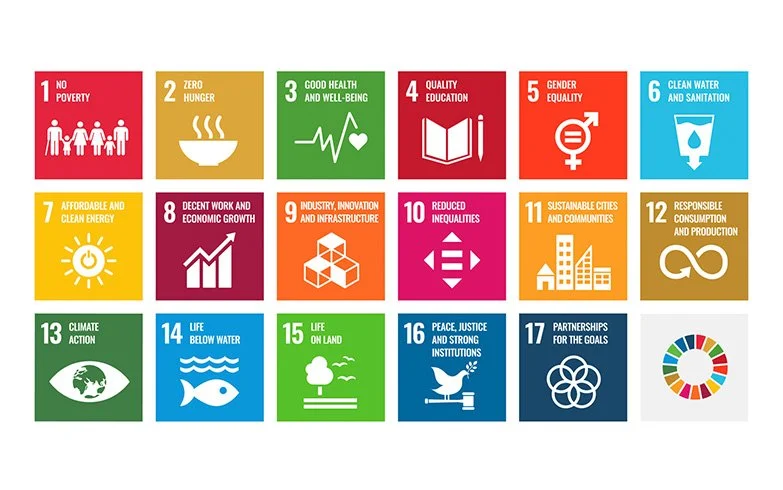
The UN Sustainable Development Goals
1. Grand Challenges
The Grand Challenges framework traces back to the National Academy of Engineering's 2008 list of fourteen challenges clustered around sustainability, security, health, and "the joy of living." Well over a hundred U.S. universities now run a Grand Challenges Scholars Program (GCSP), a competency-based track that lets students from any major build their coursework, research, and travel around a challenge they choose. Because the framework already has national brand recognition and an alumni network attached to it, students often see an immediate resume payoff, and donors see a giving opportunity connected to a prestige network rather than a one-off trip. Georgia Tech's Grand Challenges Global Experience (GCGX) is a strong illustration: a five-week, six-credit faculty-led program in South Africa pairing a course on "Sustainability, Technology, and Policy" with one on "Foundations of Leadership," explicitly marketed as a chance to encounter all seventeen UN Sustainable Development Goals in an Global South context.
2. UN Sustainable Development Goals
Adopted in 2015, the seventeen UN Sustainable Development Goals now function as a shared vocabulary across governments, NGOs, and universities, which is partly why they work so well as a program theme. Nearly every issue your students are already curious about (climate change, clean energy, health equity, AI and the digital divide, gender equity, peace and justice) maps directly onto a named, numbered goal. That gives faculty a legitimized vocabulary to say "your interest already has a global framework," rather than needing to invent one. For administrators, SDG alignment also feeds directly into institutional rankings such as the Times Higher Education Impact Rankings gives advancement officers a familiar frame for pitching ESG-minded corporate and foundation donors. Georgia Tech's GCGX program again serves as a useful model here, since it is dual-branded around both Grand Challenges and the SDGs, a reminder that these themes are best treated as complementary rather than competing.
3. One Health
One Health is the transdisciplinary concept that human, animal, and environmental health are inseparable. The framework gained enormous visibility during COVID-19 and remains a magnet for pre-health, pre-veterinary, public health, and environmental science students. It also tends to be one of the more durable donor relationships available, in part because the alumni base most drawn to it—physicians, veterinarians, public health professionals—already appreciates the need for further scholarship funding for health education. Mississippi State's Tropical Veterinary Medicine and One Health program, run in partnership with Uganda's Makerere University since 2014, is a good long-run example. It draws veterinary and non-veterinary students together each summer and is supported by a dedicated college committee that reviews student applications for funding assistance. Ohio State's Global One Health Initiative and Oklahoma State's One Health course in Mexico follow a similar pattern, pairing clinical fieldwork with a framework that donors in the health professions readily recognize and want to fund.

The City of Quito was among the first twelve UNESCO World Heritage Sites
4. UNESCO World Heritage Sites
Of the five themes that I present here, the UNESCO World Heritage Sites perhaps are most recognizable to students before they ever matriculate, serving as excellent models for admissions or prospective students presentations and materials. Framing a program around World Heritage status opens the door to humanities, art history, and preservation-minded donors and alumni and can anchor a signature program for the institution as a whole. Central Connecticut State University's program in Salerno, Italy pairs Italian-language instruction with coursework built around the region's UNESCO sites along the Amalfi Coast and offers dedicated scholarships alongside it. The graduate World Heritage Studies program at Brandenburg University of Technology Cottbus–Senftenberg, developed in cooperation with UNESCO's World Heritage Centre, was the first program in the world designed entirely around the UNESCO World Heritage Convention.
5. ESG and UN Global Compact
Environmental, Social, and Governance (ESG) principles, formalized through the UN Global Compact, are now mainstream in business education and corporate hiring alike, which makes this theme especially effective for recruiting business, finance, and pre-law students who want a program that reads as career capital rather than an elective. It is also the theme most likely to unlock corporate donors: alumni in finance, consulting, and industry are increasingly asked to demonstrate ESG literacy at work and are receptive to funding programs that build it in students. The University of Washington Tacoma's "ESG in London: A Global View" program exposes students to sustainable-reporting practice through direct engagement with business professionals in a city at the leading edge of ESG disclosure requirements. On the donor side, Middlebury's Green Education Fund, which expands sustainability-focused scholarships for students studying at DIS Copenhagen and Stockholm, is a clear example of a named philanthropic fund built specifically around this kind of thematic programming.

A campus’ common read text can serve as a fantastic theme for a faculty-led program tie-in
Local and Institution-Specific Themes
Not every effective theme has to be a global framework. A campus "Book of the Year" common-reading program, a named institute tied to your university's strategic plan, or a signature research center can work just as well, if not better. The underlying point is to tap directly into something students already share as well as into internal funding lines, such as a common-read committee or provost's office.
Practical Considerations
A few suggestions for faculty leaders considering this program design approach.
Name the theme explicitly in your course title and marketing rather than burying it in the syllabus
Map your itinerary's site visits directly onto language your administration already uses in its strategic plan
Talk to your advancement or development office before the program launches rather than after, since a named theme makes for a much easier named scholarship
Don't be afraid to combine two themes to widen your appeal to both students and donors at once.
Regardless of how intentionally designed a program may be, of course, students ultimately commit to a program because they trust the faculty leader first and its curriculum or location second and third. It helps inordinately, though, to start the design process with a wider context in mind to help ensure the program’s ultimate, and sustainable, success.
