A Virtual Journey Through the History of the Sierra Leonean Slave Trade and its Connection to the Gullah Geechee (Part 1 of 2)

by Katie Brickwood 

This March I joined Learn from Travel’s virtual study abroad programs for Agnes Scott College as a substitute virtual guide coordinator. I got the chance to audit two of the seven fascinating programs organized by Learn from Travel: “Marronage, Freedom and Resistance in the African Diaspora” based in Sierra Leone and “Marine Ecosystems'' based in Florida and Belize. In this two-part blog series, I share my experience attending virtual study abroad programs from the perspective of a student.

Virtual Study Abroad in Sierra Leone at a Glance:

Day 1: Virtual study tour of Bunce Island, Sierra Leone

Day 2: Learning about the Gullah-Geechee connection to Sierra Leone

Day 3: Sewing sweetgrass baskets and dancing with The Freetown Players!

Day 4: Maroon history and zoom with female leaders in Sierra Leone

Day 1:  Virtual study tour of Bunce Island, Sierra Leone

Monday, 8 March 2021

Wrapping up my first day of the Marronage, Freedom and Resistance in the African Diaspora program with Learn From Travel (LFT) and I was not expecting to feel as impacted as I do. I also feel a little tired from the ‘travel’ – is that possible?!

Today I was introduced to the history of the Sierra Leonean slave trade, and the connection with the Gullah-Geechee communities in the Low Country around the North Carolina-Georgia seaboard. The class met with Amadu Massally, a Sierra Leonean community leader now based in the US. He was immediately engaging as he passionately explained the ties between the culture and history of the Gullah-Geechee area and Sierra Leone - the strongest of its kind in all the Americas. Amadu shared with us both interesting and saddening statistics about the inter-Atlantic slave trade, and introduced us to Bunce Island – the “warehouse of humanity” where slaves were held, processed, and dispatched… and where I was about to visit virtually.
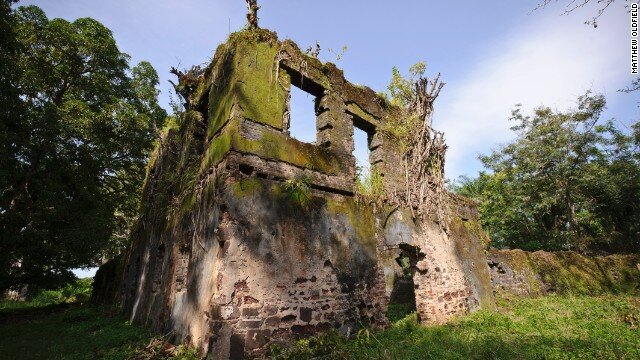
Bunce Island  Photo by: Matthew oldfield via cnn

Bunce Island Photo by: Matthew oldfield via cnn

Connecting via cell phone with local guide, Ibrahim, on Bunce Island, I walked through the ruins of the slave fortress. It was exciting and eerie to stand in the headquarters from where slave traders would view the men’s slave yard through a small window to make their selections, like choosing cattle. 

Not far from the slave castle, our guide met a local man. After chatting briefly,  Ibrahim stopped to introduce us and explain that he was hosting a virtual study abroad tour. Responding to a question from a student, the man said there are many ghost stories on the island, and even the surrounding waters are said to be possessed. This comment made me reflect even deeper about the already eerie visit to a place with such a sad history.

Day 2:  Learning about the Gullah-Geechee connection to Sierra Leone

Tuesday, 9 March 2021

women in rural sierra leone

women in rural sierra leone

We met with Dr. Joseph Opala this morning, who has dedicated his life to researching the historical and diaspora connections between Sierra Leone and the Gullah people. Dr. Opala was full of stories and anecdotes from his time spent collecting oral histories with the Gullah Geechee, conducting archaeological research on Bunce island, and working on thr rice plantations in Sierra Leone. I had no idea of the importance of Sierra Leonean rice on the economy of the Low Country, where rice became one of the most important and profitable local industries during the 1600s, using Sierra Leonean techniques and labor.

Dr. Opala also shared with the class moving stories of Gullah people tracing their roots and coming home to Sierra Leone. A particularly impactful story is that of a woman from Georgia named Mary, who found her origins through a song that was passed down through her family, a song that is only sung in one small Sierra Leonean village.

We then connected with local tourism student, Alusine, on top of Old Yagala – a high plateau area that Sierra Leoneans settled in an effort to resist capture by the slave traders. Whilst batting away gnats in the hot sun, Alusine described what life was like on Old Yagala. Alusine spoke with so much confidence and knowledge about the history and life at Old Yagala that I could really picture it. I imagined walking the steep, difficult trail that the women would walk daily to collect water. I also saw the big rock where chiefs would sit to speak with the people or observe cultural events. Alusine, who lives close to Old Yagala, explained that the name ‘Yagala’ comes from the sound of palms falling from the palm trees… “Yagalagalagala”

Day 3:  Sewing sweetgrass baskets and dancing with The Freetown Players!

Wednesday, 10 March 2021

Today I virtually walked the dusty streets of Rogbonko Mataka, a village of about 500 people 3 hours from Freetown, which is one of the few villages in Sierra Leone that still sews traditional sweetgrass baskets. Amadu explained to the class that the skill of basket sewing (it is referred to as sewing, not weaving) is taught orally, and is passed down from generation to generation within the village. It is a skill that made its way to the Low Country via the slave trade. Amadu shared a video of an eighth generation Gullah basket sewer, Nakia, travelling back to Rogbonko to trade tips and techniques with the local basket sewers, undoubtedly of shared ancestry. It was so touching to see these women, who can’t communicate verbally, communicate and connect perfectly through this traditional art.

Baskets in sierra Leone  photo by: julie via flicker

Baskets in sierra Leone photo by: julie via flicker

Leaving the countryside for the capital city of Freetown, we met with cultural ambassador Charlie Haffner, who told us his story and the importance of history telling through songs and performances. Charlie is an artist who has written songs to tell the oral history of Sierra Leone and the Gullah people, including the importance of rice to the culture as their unbroken connection to home. As Charlie put it, for Sierra Leoneans “if we do not eat rice, we are not eating”. It made me think of the symbolism of the Gullah people in the Low Country feeling ‘empty’ without rice in their bellies, without home in their bellies…

We were then treated to a live performance by The Freetown Players, a national Sierra Leonean dance troupe, whose members were beautifully dressed in colourful traditional clothing. Their song and dance was uplifting and solidified the importance of these mediums in preserving Sierra Leonean culture both locally and in America.

Day 4:  Maroon history and zoom with female leaders in Sierra Leone

Thursday, 11 March 2021

Today, my last day virtually touring Sierra Leone, the class visited St. John’s Maroon Church in Freetown to learn about Maroon history with our virtual guide Mohamad and church leader Victor. They told us the story of the 500 Jamaican Maroons who escaped slavery and came to settle Sierra Leone in the 1700’s. The limestone church that we toured was built by the Maroons in 1808, and today is a heritage building.  I saw the original wood from the boat that the Maroons arrived on in the rafting and pulpit, and the original bell from the ship which sounds strong to this day!

To finish what has been a truly eye-opening program, I was treated to a conversation with Isata Kabia, the Sierra Leonean Cabinet Minister of Social Welfare to discuss the role of women in leadership. Isata shared with the group the journey she has taken to arrive in her current role, touching on the various barriers she has had to overcome, as well as the ‘conformity trap’ in politics that she has had to break through in order to be able to propose new ideas and do things differently. I was then introduced to a group of young female activists from the University of Makeni. They shared their passion and experiences as young female leaders in their country, highlighting the importance of support networks, mentors and teamwork, reinforcing the notion that at the end of the day we can achieve more together. They made me realise that being a leader doesn’t always mean being in a ‘big leadership’ role. Leadership that is out of the spotlight is equally important and a great place to start with activism. These women truly inspired me.

A Conversation with Hon. Isata Kabia

Fambul Tik’s founder and CEO Amadu Massally brings virtual study abroad to Sierra Leone

by Lara Garanzuay, Communications Specialist

This month Learn from Travel launched seven virtual global education programs in collaboration with Agnes Scott College. One of the programs was based in Sierra Leone and was organized in collaboration with Fambul Tik. This was the first virtual study abroad program in Sierra Leone! As part of the collaboration, we got a chance to ask Amadu Massally, the founder of Fambul Tik, about his organization, the connection between Sierra Leone and the U.S., and other related questions. 

 
IMG_4072.jpg

Amadu Massally

Founder and CEO of Fambul Tik


What is Fambul Tik?

Fambul Tik, which means Family Tree in English, is a community organization interested in reconnecting Sierra Leone with her diaspora. The organization primarily focuses on the links with African Americans known as Gullah-Geechees who show a lot of Sierra Leonean ways in their culture, language, diet, etc. 

As our mission states, we are a cultural and educational organization aimed at promoting awareness and understanding the relationship between Sierra Leone and the Gullah-Geechee. We seek to foster research, preservation and development of the origins, history, culture, and the ethnicity of the Sierra Leone and Gullah-Geechee communities. 

Initially formed in 2006 as the Sierra Leone-Gullah Heritage Association, as a means to nurture the relationships between Sierra Leoneans and the Gullah-Geechee, the organization has now morphed into Fambul Tik, with a broader scope. Fambul Tik has reconnected Sierra Leone to Jamaica, Trinidad and Tobago, Grenada and Carriacou. All of these are places beyond the United States where Sierra Leonean descendants can be found. So, in short Fambul Tik is an aspiring global organization that seeks to make lasting re-connections between the diaspora and their ancestral land, using the Sierra Leone-Gullah-Geechee Connection as a model.

How does Fambul Tik work to develop relationships with descendants of Sierra Leone?

Our main objectives are:

  • To collect, preserve and present the history of the Sierra Leone Gullah Connection

  • To foster Community and Economic Development.

  • To foster Tourism in both Sierra Leone and Gullah Communities.

  • To foster Exchange Living Programs for both Sierra Leone and Gullah Communities

  • To strengthen the relationship between Sierra Leone and America

Our approach is to visit a given place where Sierra Leonean descendants may be, based on historical records documented by historians. Particularly the Trans-Atlantic ‘Slave Voyages’ Database, which leads us to where people from Africa were taken to, against their will. Based on these records, we find and engage those folks who are already doing similar work or are interested in making links with Sierra Leone specifically; or Africa in general.

In addition to the many events we have either attended or hosted in Gullah-Geechee country, we made ancestral links between African Americans of Sierra Leonean heritage with people in Jamaica, Trinidad and Tobago, Grenada and Carriacou. Folks in America are more than open to this, and we have seen tremendous support in all of these places.

African Americans visit Bunce Island, a place in Sierra Leone where enslaved people were held before being sent to North America and the Caribbean. Tens of thousands of enslaved Africans were taken from Bunce Island to the Low Country in South Carol…

African Americans visit Bunce Island, a place in Sierra Leone where enslaved people were held before being sent to North America and the Caribbean. Tens of thousands of enslaved Africans were taken from Bunce Island to the Low Country in South Carolina and Georgia. Many maintained their culture, which is known as the Gullah-Geechee culture. (Image by: Fambul Tik)

What sparked you to begin work on Fambul Tik?

I don't really know what sparked me, but it was a moment on a beach on Hilton Head Island, SC where my “spark” may have been born. Here is my story ...

In 2006, while presiding over an organization called the Sierra Leone Network, I visited Greenville, SC, to watch the sneak preview of the documentary, “African American Lives.” After watching the film, I asked some of the hotel staff whether they were Gullahs? Feeling offended by my ignorance I observed from their reactions, to assume that every black person in South Carolina should be Gullah, one of them replied: “No meeennn, those folks are down by the Coast!” With a distinct accent that I later found out was similar to Gullah. 

I realized that a lot of Gullah-Geechee people do not know that their ancestry is Gullah-Geechee even though they may know that their ancestry is that which collectively forms the Gullah-Geechee Heritage Cultural Corridor Commission; from the areas in South Carolina and Georgia, or even the southern part of North Carolina and the northern part of Florida. 

As we continued our discussions around our reactions to the film, I excitedly told the rest of the group about my desire to drive four hours to “the Coast,” just go and see and meet Gullah-Geechee people. It did not take much convincing from me before we reached consensus.

Three things stuck in my head that day! First, that the Gullah-Geechees who used to own 100 percent of the island now only own about ten percent. Second, the features of these African Americans were so African in appearance that it was quite noticeable to me after living in the U.S. for 23 years, at that point, and having seen many African Americans. Third, the feelings and self-expressions I had at the ocean knowing that my country was on the other side of the Atlantic; a place I hadn’t been in about 23 years at that moment, was uncomfortable if not tormenting. I returned back to the Washington, DC area, wrote about my experiences and someone wrote back suggesting if I had ever spoken to Joseph Opala, the historian who had worked for a long time on the Sierra Leone Gullah Connection, starting in 1980, when he presented his ideas at the United States Embassy, in Freetown, Sierra Leone.”

Why is this work important? 

This work is important for at least two reasons. First, we need to tell our own narratives, our own accurate stories. Once we establish these narratives we must then initiate programs that have the potential to effectively mobilize people on both the Sierra Leonean and American sides of the story. As a second reason, we will move beyond the history and culture and on to purposeful work, up to and including charitable work, social entrepreneurship or outright investments for profits.

Africa will never realize her optimal potential outside of her diaspora. The sooner we realize this and work together to make this possible, the better things will become for black people.

A Gullah sweetgrass basket maker from Mt. Pleasant, South Carolina, known as the sweetgrass basket capital of the world, shares techniques with villagers in Rogbonko Mathaka, a remote village in Sierra Leone, known for shuku Blay baskets which are v…

A Gullah sweetgrass basket maker from Mt. Pleasant, South Carolina, known as the sweetgrass basket capital of the world, shares techniques with villagers in Rogbonko Mathaka, a remote village in Sierra Leone, known for shuku Blay baskets which are very similar. (Image by: Fambul Tik)

Where do you see Fambul Tik in the next 5 years?

My personal dream is to see Fambul Tik evolve into a leading heritage community organization that spans the West Coast of Africa at a minimum. But a bigger dream is that in five years we would have established our community organization as a representative of some of our diaspora actors who want to do different things in Sierra Leone. We would have become an entity that teaches Sierra Leone’s history and culture to Sierra Leoneans in the diaspora; our immigrant children, including our deeper diaspora with the Gullah-Geechee and Sierra Leonean Americans.

Beyond the history and culture, we would have become a trustworthy and credible “gatekeeper” for those in the diaspora who may want to be more involved in Sierra Leone through charitable work, social entrepreneurship and/or investments for profit. I want to drive that point home because we are purposeful in wanting to go ‘beyond the fanfare’. A phrase I use as inspiration to do more of what we do. Fambul Tik does and goes beyond just tours.

What do you hope students will learn about Sierra Leone and Gullah-Geechee communities as part of their participation in the Learn from Travel study abroad program?

Well, first and foremost, they will learn about the close and historic links between Sierra Leone and the United States. They will learn about the rice culture and economy and how the enslaved Africans became the Gullah-Geechees. Also about the Trans-Atlantic Slave Trade especially as it relates to North America. They will learn the three historical themes that Sierra Leone illustrates: Slavery, Resistance and Abolition. We also hope students will grasp that the Gullah language evolved from both English and African words.

What advice would you give college faculty considering taking students to Sierra Leone for a study abroad program?

I advise them to research the country properly, especially with regard to the U.S. government’s point of view as guided by the State Department. They should also talk to people like us who have organizations that promote and coordinate study abroad programs. We are currently exploring partnerships with Coastal Carolina University, where Dr. Fredanna D. McCormack McGough, who has done some study abroad programs to African countries, will be a great resource for ideas and possible replication. We can make those connections.

How can students and faculty support your work? Do you have any internship or volunteer opportunities for students? 

That is an excellent question! Maybe because it’s something we had not thought about or made any moves towards that. If students and/or faculty can see value in our work we will like to provide opportunities for them to do so. Maybe one of the things we can do is to look at what others have done in the past with the same or similar environment.

If you’re interested in taking students to Sierra Leone in person or virtually, you can visit our faculty-led programs page or our virtual programs page. To learn more about Fambul Tik, please visit their website.

Study Abroad from the Safety of Your Home

by Lara Garanzuay, Communications Specialist

Learn From Travel is working with Agnes Scott College to offer seven virtual study abroad programs this Spring. Both organizations value providing students with an education that pushes them to think deeply, engage in their communities and have an international perspective. The Agnes Scott College SUMMIT Program is a eight-day faculty-led global immersion experience where students study a non-English language, and get involved in activities to better understand identity and culture in an interconnected world. 

SUMMIT ensures that thinking globally begins with learning globally. Students will be more than a tourist, they will build cultural competencies that will serve them in work and in life.

With safe travel not possible in the Spring of 2021, Learn from Travel reformatted several existing Global Journey’s programs and developed several new virtual programs to meet the objectives of the SUMMIT Program at Agnes Scott College. The programs described below are innovative in their approach and powerful in their content. 


Featured Study Abroad Virtual Programs


Astronomy and Discovery in Central Florida

This program located in Central Florida includes virtual reality visits to the Kennedy Space Center and other space related sites using VR viewers and 360 degree videos and photos. Students will also explore the connection between Central Florida and Puerto Rico, where the recently decommissioned Arecibo Observatory is located, and learn about the Puerto Rican community in Central Florida. Through conversations with environmental and disaster managers, nonprofit leaders, and Puerto Rican hurricane refugees, students will learn about the coastal impact of hurricanes on Central Florida and on Puerto Rico and its people, many of whom have moved to Central Florida since Hurricane Maria in 2017. 

During the four-day program, Agnes Scott College Students will also meet with University of Central Florida faculty and student experts, have discussions with historians and city officials, and learn about Environmental Protection in Central Florida. 


Marine Ecosystems in the Florida Keys and Belize

The Florida Keys are a string of tropical islands stretching about 120 miles off the southern tip of Florida. They are an international destination for diving and other marine activities, and are located in a protected marine sanctuary. The Keys are similar to the Cayes (Keys) of Belize, including Caye Caulker and Ambergris Caye, two of the most visited locations in Belize due to their abundance of marine life and international fame for diving and snorkeling.  

Florida Keys.jpg

In this weeklong virtual program, which was initially designed to be a travel program to Belize, students will learn about the various marine ecosystems, their threats, and efforts to protect and restore them in both locations. The group will learn about coral research and restoration, hear from scientists and knowledgeable tour guides, and experience the underwater world through 360° 3D videos. Among many other activities, students will meet their Belizean peers to share culture and knowledge.  

Marronage, Freedom and Resistance in the African Diaspora in Sierra Leone

This four-day virtual international education program is designed to explore the connection between the Gullah-Geechee communities in the United States and Sierra Leone, the departure point for thousands of enslaved people during the colonial era. Students will learn about the resistance to slavery, its abolition, and the establishment of a free society in Sierra Leone, including the settlement by African Americans who returned to Sierra Leone after generations in bondage. 

Participating students and faculty will experience virtual tours of slave castles and sites of resistance to slavery, visit villages, and watch skits in the Krio language. The program also allows the students to experience Sierra Leone culture by conversing with Sierra Leonean students and political leaders. They will deepen their exploration of the cultural, economic, and ethnic connection between Western Africa and the United States.

By Erik Cleves Kristensen - Freetown street, CC BY 2.0

By Erik Cleves Kristensen - Freetown street, CC BY 2.0

This virtual study abroad program draws on the support of local partners and features prominent guest speakers and subject matter experts. Live virtual experiences and interactions with Sierra Leonean students are among the highlights of this immersive virtual program.  


Diversity and Health in Ecuador and Miami

Students will compare South Florida and Ecuador in a variety of factors that influence health outcomes while learning about cultural diversity, differences between public and private healthcare, and environmental elements.

1920px-Quito,_Ecuador_-_Michael_Shade.jpeg

Students will learn about health and healthcare in Ecuador through numerous lectures by University of the Americas in Quito faculty. They will also learn about alternative and rural medicine and hear from a group of women in the Chota Valley, a historically Afro-Ecuadorian community,  who are starting a tourism initiative. 

In Miami  students will gain an understanding of social determinants of health through conversations with the medical director of a community health clinic network, a young leader from the Miccosukee Tribe who will share his thoughts on spiritual and herbal medicine, and volunteers at a community garden located in a food desert.

Identity, Globalization and Social Change in Bulgaria and Chicago

Chicago is home to the largest Bulgarian community in the United States. In this virtual education program participants will learn about the past and present day experience of the Bulgarian community in Chicago.

Chicago and Bulgaria.jpg

Through virtual visits to Chicago and its suburbs, students will take part in conversations with local leaders, cultural activities, and historical site visits. Additionally, they will visit the Jane Addams Hull House and other iconic Chicago locations to better understand the context of the city. Students will experience unique events by conversing with Bulgarian artist and community leader Kina Bogovska, attending panels on immigrant identity, touring Bulgarian community and cultural centers, visiting the Bulgarian Embassy and touring the Jane Addams Hull-House museum.


Industrialization and Scientific Progress, Benefits and Costs in Chicago

Chicago is the birthplace of the first refrigerated rail car and the car radio, and is home to Willis Tower - the second tallest building in the Western Hemisphere. During the 20th Century, Chicago became the world's largest rail hub, and one of its busiest ports.

The city’s impressive growth and industrialization did not come without costs. The Great Chicago Fire destroyed the mostly wooden city in 1871, leaving 100,000 people without homes. After rapid industrialization and population growth in the early 20th Century, Lake Michigan was polluted by sewage and industrial waste. Each time, however, the city’s engineers found a way out and up. Today, Chicago is ranked as one of the United States’ most diverse cities with a bustling economy. 

Industrialization .jpg

During their virtual travel to Chicago, through virtual site visits and conversations with innovators, historians, local students, and scientists, Agnes Scott College students will learn about the past and present of the greatest city in the Midwest and have a chance to take a critical look at the costs of its progress. Throughout the week-long experience, students will also tour the 1983 World Fair and Argonne National Lab, take part in diversity panels, and virtually visit a comedy club.


The Presence of the Past in Germany and the U.S. in Washington D.C.

This virtual program, based in the capital of the United States, is intended to help students struggle with the complexities of memory and identity as they relate to the atrocities of the Nazi regime in Germany and slavery in the U.S. The program will allow students to compare and contrast the U.S. and Germany.

D.C..jpg

Students will embark on virtual visits and discussions by museum guides to the National Mall, the Holocaust Memorial Museum, and the National Museum of African American History and Culture. Participating faculty and students will deepen their understanding through conversation with topic experts and present day activists. Students will finish the program with few concrete answers, but having explored a number of universal questions that many nations around the world, including the U.S., face today.    


Learn from Travel can create customized virtual programs on any subject matter anywhere in the world. For more information, please visit our virtual programs page.


What to Expect from Learn from Travel in 2021

by Makayla Vasek, Communications Specialist

Needless to say, 2020 was a challenging and unnerving year for most people and many industries. The international education community particularly suffered when travel restrictions and online schooling essentially paused all study abroad programs. After having all Learn from Travel programs indefinitely postponed, like many universities and study abroad providers across the nation, we began to consider what would be the next step in international education.

Instead of spending our summer organizing programs and sending groups of students to various destinations in Latin America as we had initially planned, we used that time to conduct extensive market research on the state of study abroad. We spoke to university administrators, faculty, and students who have previously studied abroad to understand their expectations and concerns for post-pandemic travel. We also sought insight and advice on how we as a company could make study abroad more accessible and inclusive for all students. Finally, we used the knowledge gained in these interviews to focus our attention on a new branch of international education: virtual programming.

A Word From Our Founder

In an interview with Roman Yavich, founder of Learn from Travel, we had the chance to ask him about the progress the company has made in virtual programming as well as his opinions on how this new innovation will permanently change the future of study abroad.

Looking Forward

This is only a starting point. Around the world, educators are beginning to realize the value technology can offer in internationalizing education, and we suspect that virtual programming is here to stay. As universities, study abroad providers, and global partners collaborate, the opportunity to expand study abroad in an affordable and safe way is limitless. I guess this is what it feels like to live history in more ways than one.

If virtual study abroad is something you want to be a part of or something you want to offer your students, find more details about Learn from Travel’s virtual programs here.

Navigating Virtual Group Projects

by Makayla Vasek, Communications Specialist

With the spring semester right around the corner, faculty and students across the country are preparing for another set of online and hybrid classes. The development of the COVID-19 vaccine gives us hope for an eventual return to normalcy, but our current state requires most universities to continue virtual learning. While a semester of experience has given us the time to adapt to virtual learning platforms, many challenges remain, especially in the area of online collaboration.

Group projects, also known as Collaborative Online Learning (COIL) or Virtual Exchange in the study abroad world, are stressful enough without the added component of working with people from different cities and regions of the globe. Below, we’ve identified 3 C’s to Success for Online Collaboration as they relate to virtual learning locally and globally.

group-project

#1 Communication

If there is anything I’ve learned from my own experience working on a global team project, it’s that you cannot work well together until you communicate well with each other. The greatest challenge of virtual group projects is the physical distance, which often evolves into a communicative distance, between group members.

It is critical that you create communication guidelines and expectations at the start of any group project to set your team up for success. Weekly synchronous communication via team video chats or phone calls should be the cornerstone of your communication plan while asynchronous commentary via a group chat can provide a welcoming space for team members to ask questions and share ideas outside of set work hours. Another useful tool for asynchronous communication is the “Comment” option on shared documents. Whether you are using Google Docs, Microsoft Word Online, or any other web-based document, you can use the “Comment” tool to highlight specific components of the project and type your relevant suggestions or concerns. Your teammates can then review and respond to these comments when they log on to the document at a later time.

team-video-call

To avoid interpersonal irritation down the road, make an effort before you initiate project work to have all team members identify their personal strengths and weaknesses as they relate to group projects. Moving forward, keep these items in a shared document to refer to regularly when you run into problems with a specific team member. By knowing their strengths and weaknesses you may be able to more efficiently understand where they need assistance and where they thrive on their own.

Every team is different and will require a unique communications plan. The most important thing, however, is that you always practice transparency. If you are ever concerned that you are messaging too much in a group chat or speaking too regularly during video calls as compared to your teammates, just remember that over-communicating is always better than under-communicating.


#2 Connection

Another challenge of online collaboration is working with team members you may never formally meet in person. It can be intimidating to talk to and work with people you know little about. Don’t look at your group project as just a grade in a class, but use it as a way to meet people outside of your inner circle. Identify common interests and passions and use these to propel your project forward.

Ultimately, finding time outside of the project to talk with your team about their daily lives and to check in on each other’s mental health is a great way to remind yourselves that you are working with real people, not robots. This is a best practice to avoid frustrations when a team member is running late on a deliverable because they are dealing with sickness or taking care of a family member for instance.

team-connection

In addition to connecting personally, it is also important to connect professionally, even from miles apart. Whether you are working with students from your same university or with people on the other side of the world, everyone has their own busy schedule. Start your team collaboration by creating a master calendar where all team members can identify the days and times of the week that they plan to dedicate to the project. Remember to specify time zone differences and, as a team, select an appropriate time zone with which to communicate for the extent of the project.

Use this calendar to mark out specific days/times when all team members can log on, even if only for an hour at a time. Working synchronously is more efficient because you can have your questions answered in real-time. You can even use your master calendar to create sub-teams based on when some members will be logged on at the same time or based on similar time zones.


#3 Constructive Criticism

Finally, never underestimate the importance of feedback. Although we’ve listed this best practice last, we believe that the feedback loop should be an ongoing process at every phase of the project. Periodically, halt work to engage in a team conversation or, if it makes your teammates more comfortable, release an anonymous survey where members can share their concerns as well as what they have found most successful in regards to the project.

This phase of the process can be unnerving when you don’t know how a teammate will respond to your criticism, so make it a point to show your own openness to feedback as a way to encourage your team members to be transparent and truthful with you. You will undoubtedly run into problems and speed bumps with any group you work with, so it is a good practice to identify and discuss team issues rather than ignore them.


Happy Collaborating!

Group projects should be a fun and efficient way to complete your academic and professional work. Especially during this time of isolation, group work can be a great way to reconnect with your colleagues, to network with community leaders and students abroad, and to find solutions that improve our society.

online-collaboration

Online collaboration skills are also a great resume booster because of their importance to real-world careers. For example, if you work for a global company, on any given day you may go from a meeting with your local Miami team to a call with the manager of the Portland office to a global conference with team leads from various countries around the world. So when your professor assigns you a group project, view it as an opportunity to prepare for your future career.

Read how Learn from Travel incorporates and facilitates Collaborative International Projects in its virtual study abroad programs here.

Five Strategies to Reduce Racism in International Education

by Makayla Vasek, Communications Specialist

2020 has been an eye-opening year for many Americans as social justice movements and the pandemic have underscored the racial discrimination that continues to perpetuate education, economic, and health disparities in the U.S. While some universities are responding to these movements by increasing resources for minority students, there has been little to no discussion devoted to the topic of racism in international education.

International Education in the U.S.

According to the Institute of International Education OpenDoors report, 1.08 million international students studied in the U.S. during the 2019-20 academic year, declining only by 1.8% despite the global coronavirus pandemic. Meanwhile, almost 350,000 American students studied abroad the year prior. While universities in the U.S. have progressively improved global connectivity on their campuses, there is a prominent racial disparity when it comes to sending students abroad. Currently, students of color represent only 30% of study abroad participants despite accounting for 45% of U.S. college enrollment as of 2018. Considering these statistics, efforts to diversify study abroad and discuss the implications that come with being a minority student in another country are still greatly underdeveloped on U.S. campuses.

What It Means to Be ______ Abroad

streets-of-havana-cuba

During the study abroad planning process, students are often so overwhelmed with booking flights, securing accommodations, succeeding academically, and making new friends that they have no time to consider what it means to be a specific race abroad. Similarly, most universities fail to prioritize the mental and emotional preparations students need prior to moving to a new community, especially if they suspect they will face racism.

Despite the racism in our own country, relative to most nations the U.S. houses a more diverse national and college population. In addition to considering our own racial disparities, it's important to identify the racial stereotypes and perceptions that exist in each student’s host country prior to travel, to ensure safety and a sense of belonging abroad.

How to Combat Racism in Study Abroad

As a proponent of cultural understanding and global citizenship, study abroad should be at the forefront of the antiracism movement yet has fallen short with discussion on racism abroad emerging only recently.

Unfortunately, we cannot control how people in other countries will treat American students. Many stories from students of color, however, suggest that their white counterparts, who represent 70% of U.S. study abroad, also perpetuate racism as they bring racial stereotypes from their home universities abroad. As we begin to understand the nuances of racism abroad, we’ve identified five steps to start combatting racism in international education from your home campus:

diversity-on-college-campus
  1. Acknowledge Racism in International Education

    Because racism abroad is not regularly discussed prior to travel, students of color are often misinformed and disillusioned about what they are walking into when they sign up for a study abroad program. It is critical that universities re-think their pre-departure resources to include continual discussion on racism abroad as well as insights on how students can deal with discrimination.

    One university that successfully educates about racism in international education is Agnes Scott College. As a women’s liberal arts college with a required Global Journeys immersion experience for first-year students, Agnes Scott College provides pre-travel workshops on topics such as traveling while Black, traveling while Muslim, etc. to teach students how to safely acknowledge and celebrate their identities abroad.

  2. Provide Scholarships/Resources for Minority Students

    Study abroad is based on the principle of tearing down cultural barriers and creating a global community. But, in order to create a truly global world, study abroad cannot be attainable by only white students. Because money can be a significant barrier for minority students, providing scholarships can help diversify study abroad.

    The University of Texas at Austin takes a unique approach to diversity scholarships by recruiting through first-generation student organizations to improve diversity in every sense of the word: race, ethnicity, age, major, etc. When study abroad is more diverse, conversations about discrimination abroad and allyship will become more commonplace naturally, creating an atmosphere of cross-cultural understanding and collaboration.

  3. Diversify Study Abroad Faculty

    Fostering an anti-racist study abroad community starts with diversifying its participants and perspectives. In order to naturally diversify student participation, Professor Arthur Joyce at University of Colorado Boulder runs programs by a diverse group of educators. Rather than rely on his one perspective, Joyce collaborates with colleagues and his global connections to teach through various lenses.

    This strategy can include gathering U.S. faculty leaders from diverse backgrounds and areas of expertise as well as partnering with faculty and community members within the host country. When students share identities with the faculty leaders and program guides, they feel more inclined to participate themselves, which establishes a welcoming environment in which students of color experience a greater sense of belonging abroad.

  4. Share Study Abroad Stories by Students of Color

    Another way to give students peace of mind prior to travel is to share the numerous stories by students of color who have already participated in study abroad. The challenges they face and overcome as well as their perspectives on cross-cultural conversations can assure students that race is not a barrier to traveling abroad.

    Diversity Abroad’s Abroad360° is an online platform for student advising and success stories. This campaign features a number of micro-modules covering topics such as Being a Student of Color Abroad and Allyship for Diverse Peers Abroad. Additionally, their Living Abroad blogs feature students’ stories on traveling abroad with certain identities including Students of Color in Ireland, LGBTQIA+ Students in Costa Rica, Religious & Spiritual Students in South Africa, etc.

  5. Teach Anti-Racism Abroad

    Study abroad provides an incredible opportunity for education outside of the classroom and outside of a student’s comfort zone. Furthermore, while abroad students can take a more critical look at their home country, state, city, and community. This opportunity to open students' eyes to racism at home and abroad should not be missed by educators and faculty leading short-term programs.

    Colonialism and economic inequality are just two of the frequently discussed topics in study abroad that dovetail perfectly into a discussion of racism. Program providers, like Learn from Travel, can facilitate these challenging conversations during the most appropriate moments.

community-members-teach-about-ecotourism

Beyond these initial steps to counter racism in international education, the best way for individual faculty leaders and students to prepare to go abroad is to understand the host culture’s history as well as its current racial makeup and perceptions. As we aim to make study abroad more inclusive, showing an understanding of others will inherently cause them to take a deeper look at their own biases and stereotypes and reevaluate their perceptions.

Recruiting Students to Study Abroad Virtually

by Makayla Vasek, Communications Specialist

Over the summer, I had the opportunity to speak with a number of university students about their previous study abroad experiences as well as their opinions on the rise in virtual study abroad programs. When I asked them individually if they would consider participating in a virtual program, all 5 students quickly responded “no.” For study abroad providers, universities, and faculty leaders, that is incredibly discouraging with the current climate requiring us to postpone travel.

But, as I inquired further, I realized that the students weren’t so much against virtual study abroad as they were unaware of what the programs could encompass. In fact, as I presented some of the innovations that educational companies are developing such as international virtual internships and 360° virtual reality travel, most of the students revoked their initial responses and showed interest in learning more. What I gathered from these discussions is that the success of virtual study abroad is and will continue to be highly dependent on the way it is presented to the ultimate consumer: students.

Based on my conversations with students, I’ve identified several effective and defective marketing strategies that faculty members should consider to increase virtual study abroad participation.

marketing-strategy-for-study-abroad

Marketing Dos

Do Educate Yourself on the Virtual Technology Prior to Promotion

Today’s university students were born in the digital age and therefore can spot a technologically inept professor from miles away, especially in our new virtual format. As a student myself, I have switched online classes based on my former professor’s inability to fix her audio settings, because there is nothing more frustrating or discouraging than taking a virtual class with a professor who doesn’t know how to use Zoom. Since the technology for virtual study abroad is also new to students, it’s even more imperative that you familiarize yourself and test the virtual study abroad software prior to promoting your program. Then, when students come with questions, you will have the knowledge to provide clarity and further interest them.

Do Use Visuals and Demos in Your Program Promotion

The term “virtual study abroad” itself is a vague and oxymoronic phrase that, as I mentioned before, isn’t well-defined for students. It is the job of the faculty leaders to visually define these programs with photographic and interactive promotional collateral. Be sure to work with your university or study abroad provider to create sample program simulations and VR headset demos when applicable, so students can view the study abroad platforms on which they’d be expected to collaborate and visualize the virtual travel experience prior to committing to the program.

Do Show Your Own Excitement for the Program

Most students who choose to participate in a faculty-led study abroad program do so because they have previously taken and thoroughly enjoyed a class led by that faculty member. They respect and value your thoughts. Thus, if you demonstrate excitement for the program, it will spread to the students. On the other hand, if you fake excitement, it will show. So, identify what most excites you about the program and share it with your students.

Marketing Don’ts

Don’t Present Virtual Programs as a Substitute for In-person Study Abroad

The primary opposition to virtual study abroad is that “it isn’t the same as in-person travel.” And everyone who says this is right. Virtual programs can never replace in-person travel, so we need to stop pretending otherwise. Instead, virtual study abroad ought to be marketed as its own valuable experience. We are in a unique position to offer brand-new programs that create a global classroom without the high cost or stressful logistics involved with travel. Students who may have never even considered studying abroad because of costs or on-campus commitments now have the chance to engage in a culturally immersive experience without leaving their homes. Therefore, present virtual study abroad as a new invaluable opportunity, not as a second choice program.

Don’t Only Promote Your Program to the Study Abroad Market

Because virtual study abroad is a unique experience with greater affordability, accessibility, and scalability than traditional study abroad, there isn’t one “right” student target market. As you place and direct your promotional collateral, identify groups of students who might otherwise be unable to participate in study abroad. Student-athletes, work-study students, and even students with families now have the opportunity and flexibility to internationalize their education, if you only show them how.

Don’t Forget to Promote the Cultural Elements of the Program

It’s easy for university administrators and faculty leaders to become so caught up in the logistical, technological, and academic requirements of virtual study abroad that they completely neglect what interests students in the first place: cultural immersion. Without the travel component, it is even more important to implement cultural elements into the virtual programs. Whether this includes one-on-one language practice, live-streamed cooking classes, or virtual museum tours, implement a strong focus on cultural immersion and make it a primary talking point in your marketing strategy.

How to Approach Virtual Study Abroad Fairs

Every year, students and faculty leaders alike anticipate their universities' study abroad fairs. These are events where students start or continue their study abroad program search and make meaningful connections with faculty leaders. Now that these fairs have become virtual, however, participation has dropped drastically. I think the reason for this shift is that it can be intimidating to speak with people via video call, especially when there are 50+ participants listening to what you have to say. The software often lags causing people to accidentally talk over each other, and many students fall victim to passive listening.

The best way to approach this problem is to restructure the large fair format into small group info sessions. Ultimately, faculty leaders need to find a way to be more accessible to students in a welcoming environment. The University of Iowa, for example, has done a great job of increasing accessibility by offering Virtual Discover Abroad Sessions every Tuesday and Friday during the semester. With this format, administrators and faculty leaders are able to directly address individual students on a recurring basis. In addition, the UIOWA website features presentation topics and recordings from their virtual study abroad fair that occurred in September for students to reference on their own time.

Marketing is just communicating. Students are seeking that communication, but many don’t know where to look. So, the most important marketing strategy is to be available for both the students who are completely on board and those who are hesitant or simply looking for someone to answer their questions.

study-abroad-fair

As you begin to rethink your virtual study abroad marketing strategy, start by reviewing the resources below to answer the questions you may have about leading a virtual study abroad program.


Feel free to reach out to Learn from Travel for support with marketing virtual programs.