

Comprehensive Sustainability: Environmental, Social, and Economic Responsibilities of Education Abroad
/
sustainable travel goes far beyond consideration of one’s transportation methods
When we hear “sustainable travel,” many of us picture reusable water bottles, carbon offsets, and shorter or fewer flights. If environmental concerns dominate our vision, though, we hold an impoverished view of sustainability. A community that cannot earn a fair living from visiting groups, or that sees its customs treated as scenery, has little capacity or motivation to protect the forest, reef, or watersheds that students came to study (and tourist to visit). Comprehensive sustainability rests not only on environmental but also social and economic justice.
What We Do at Learn From Travel
Our community-based planning framework treats these three dimensions as inseparable.
Social. Our framework asks faculty leaders to learn local norms, how genders and ages interact, how people greet one another, and what clothing or student behavior could offend hosts. It warns that expensive gifts can set a tone of inequality and that costly jewelry can feed materialism. It also asks who the community leaders are, whether tourism benefits are evenly distributed, and what we share from our own culture (dances, songs, stories, crafts) without promoting Americanization.
Economic. We ask about the base of the local economy and local development priorities, and point to the UN SDGs and the Forum on Education Abroad’s SDG resource. We ask how to compensate local providers equitably, including whether we are asking people to volunteer when we should be paying them. We favor locally owned restaurants, hotels, transportation, and guides, and we consider funding local nonprofits through programming.
Environmental. We estimate each program’s carbon footprint and look for ways to reduce fly time, such as nearby destinations or virtual components; and drive time, by visiting fewer places for longer. We adopt no-plastic-bottle and single-use policies, weigh our waste, and use local guides to limit impact on fragile ecosystems where possible. Learn From Travel also offsets its carbon and supports verified carbon reduction, plastic recovery, and water restoration projects.

Consider visiting local vendors intentionally as part of a critically sustainable Program
What the Field Says
We are not alone in this view. The Forum on Education Abroad’s guidelines for advancing the UN SDGs are explicitly meant to direct the sector toward social, economic, and environmental sustainability. The Forum’s inaugural award in this area honors programs that promote all three, and Penn State Global received it.
The research is candid about the environmental side. A Frontiers article on European education abroad finds that air travel is the largest component of a program’s carbon footprint. A Frontiers piece on study abroad and sustainability argues the field must weigh carbon costs against educational benefits instead of assuming the benefits always win. UW–Madison’s study abroad office suggests students consider distance, stay longer when possible, and choose direct flights with fewer connections.
The literature is just as candid about communities. A Journal of Studies in International Education article, “Conceptualizing University Education Study Abroad Programs Using a Mutualistic Process,” notes how little research has examined what role the community plays or how it is affected. It uses a symbiosis framework to show both positive and negative impacts of student interaction. Research by Cynthia Wood likewise found little reliable data on student impact on host communities. A Frontiers study of a rural Costa Rican community that has hosted dozens of ecotourism and study abroad programs asks what its members perceive as benefits and harms. Brondo and Kent, also in Frontiers, interrogate the assumed benefits of short-term programs and propose decolonizing approaches.
Human dignity should remain a key pillar of the systems thinking necessary for critical sustainability efforts. A community-based participatory study abroad model warns that short-term programs often lack depth of engagement and may perpetuate power and privilege. It proposes shared power, co-learning, reciprocal benefits, and sustainability as remedies. Indiana University Indianapolis’s ethical engagement toolkit says collaboration must respect the host partner’s right to define the program and its needs and must plan for sustainability and continuity. That working group draws on the AAC&U definition of global learning. At a NAFSA session, presenters described the goal as moving from transactional to transformative partnerships, with mutually beneficial exchange. Hartman, Kiely, Boettcher, and Friedrichs develop this in Community-Based Global Learning.
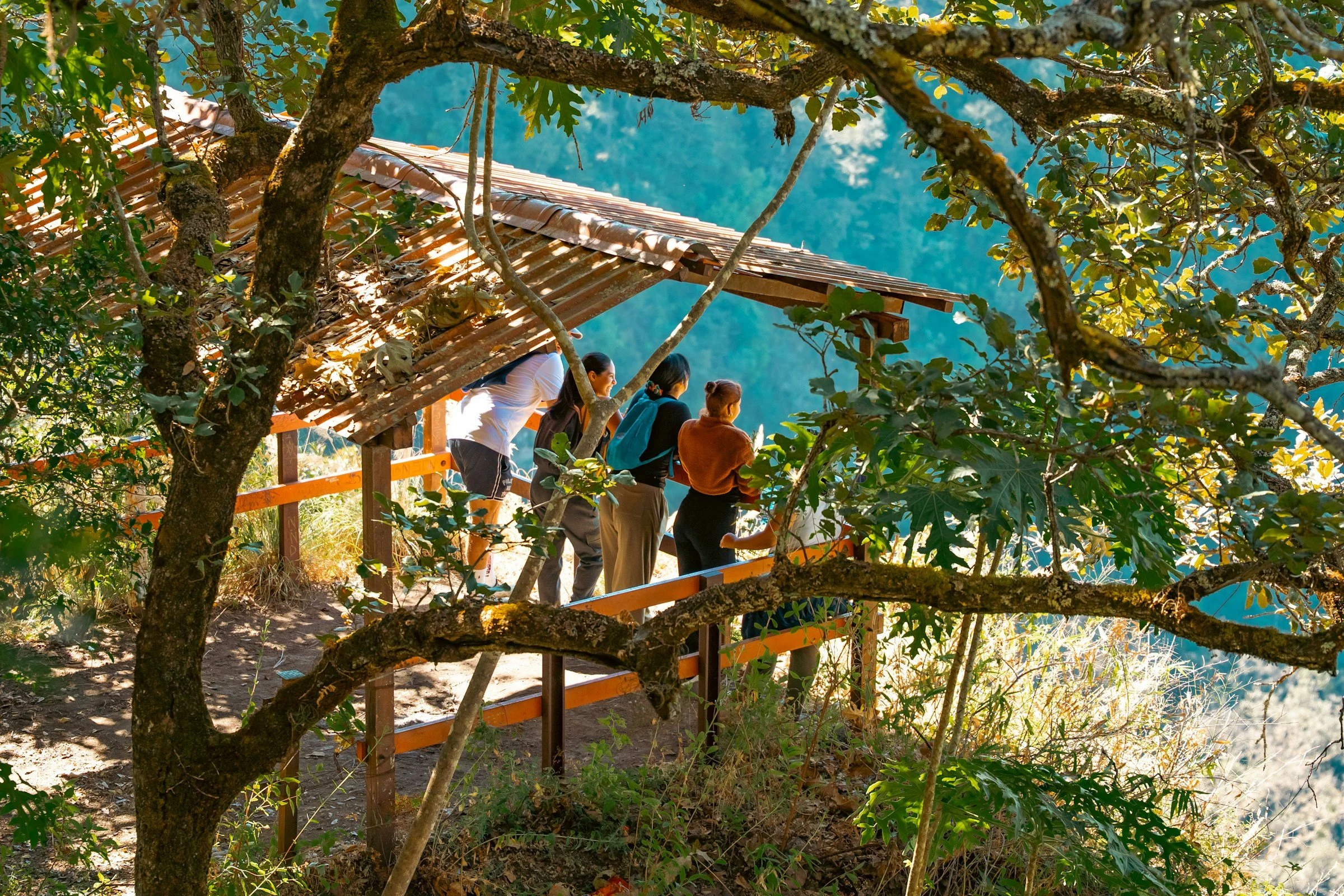
Ecotourism provides opportunities as well as challenges for comprehensive sustainability
Reciprocity: Our Dollars, Our Presence
The Institute of International Education’s Open Doors report counted 298,180 Americans studying abroad for credit in 2023–24. Each traveler carries purchasing power, and spending decisions shape a local economy. One tourism official cites estimates that about 80% of spending on all-inclusive package tours goes to airlines, hotels, and international companies, and that import-related leakage runs 40–50% of gross tourism earnings in small economies. These are estimates and vary by destination, but the pattern is real: where we spend determines who benefits.
The University of Washington describes the “colonial student,” who consumes a place without its struggles, in programs that insulate students and create a “shadow American culture” in the host community. The corrective is the one toward which we design intentionally: structured discussion with local guides, who can say what visitors do to their community and what would make visits better. A 2021 JCIHE review of Education Abroad: Bridging Scholarship and Practice urges the field to ask what host communities want and need, not only what students gain.

Consider Sustainability as a multilateral relationship
Six Questions for Your Next Program
Environmental
1. How far must we fly, and involving how many layovers? Could a closer destination, a longer stay, or a hybrid design meet the same learning outcomes with a smaller footprint?
2. How ecologically fragile is the site, and do we have local guides, group-size limits, and waste policies to protect it?
Social
3. Have we asked residents, not just our partners, which local customs, dress norms, and behaviors we must respect, and how will we prepare students?
4. Who in the community decides whether we are welcome, and who is excluded from the benefits of hosting?
Economic
5. Are we purchasing from locally owned lodging, transport, and restaurants, and paying local experts fairly instead of asking them to volunteer?
6. When students shop, do they buy from local artisans or from corporate vendors, and have we discussed why it matters?
Comprehensive sustainability ultimately centers relationships instead of metrics. Programs designed intentionally with reciprocity ask what we leave behind, not only what we take home.
